Category: Search Engine

  • The Rise of Fake Profiles on Facebook

    The Rise of Fake Profiles on Facebook

    A Warning to Professionals and Mature Users

    Over the past few years, I’ve noticed a disturbing and increasingly aggressive trend on Facebook — and it’s something more people should be talking about.

    As a business professional in my 60s, I’ve always enjoyed connecting with peers, entrepreneurs, and like-minded individuals through social media. But what began as the occasional suspicious friend request has grown into a weekly — sometimes daily — flood of messages from profiles that are almost certainly fake.

    At first glance, these profiles often seem legitimate: attractive women claiming to be successful fashion entrepreneurs or investors, often located in major U.S. cities like Los Angeles, New York, or even my home state. Their friend request comes with a soft, seemingly harmless message like:

    “I was a little curious when I saw you appear in my friend recommendations, so I added you without knowing why. I hope I didn’t disturb you, and I’m sorry.”

    Sounds polite, right? But what follows is anything but innocent.


    The Conversation Trap

    Once you accept the request or reply, the dialogue begins. And it always follows a pattern:

    • They ask about your age, location, and occupation.
    • They claim to be “curious” about your business success, and would love to be mentored by you.
    • They express a feeling of personal connection with you, and the age difference is never an issue for them.
    • They often pivot quickly to discussions about investing, usually in gold or cryptocurrency.
    • They try to move the conversation to WhatsApp almost immediately. In one case I forced the communication to a more secure platform “Signal” explaining I can NOT use WhatsApp for privacy reasons. When the “fake profile person” agreed to set up a conversation on Signal, it appeared under a totally different name, which she claimed to be her mother’s account. 🙂
    • They never want to speak on the phone, or simply avoid phone conversations where you would be able to have a point of reference or contact info that law enforcement can use against them.
    • They often claim to be originally from Europe or Russia, but now live in the U.S.

    And if you share anything remotely personal — such as your interests, lifestyle, or family — they latch on and begin chatting with increased frequency. Soon, you’re fielding messages throughout the day.

    It’s not just an annoyance — it’s an outrageous waste of time and, worse, a serious threat to your digital privacy.


    The Real Danger: Social Engineering

    These aren’t lonely hearts looking to connect. They’re part of organized efforts to extract personal data, build psychological profiles, and possibly target victims for fraud, scams, or blackmail.

    They want to know:

    • What you like and dislike
    • Who your family members are
    • Whether you have children
    • Your exact age
    • Whether you own a business
    • What you invest in or how you make money

    In short, they’re building a digital dossier that can be sold, reused, or exploited in various forms of cybercrime. This is social engineering — not conversation.


    Why Isn’t Facebook Stopping It?

    Despite Facebook’s vast resources and AI systems, fake accounts continue to flourish. Here’s why:

    • Fake profiles are made to look authentic — with real photos (often stolen) and believable bios.
    • Scammers send personal 1-on-1 messages that bypass mass-spam filters.
    • They exploit the “People You May Know” feature to get into your social circles.
    • And Facebook, frankly, has a poor track record when it comes to proactive moderation.
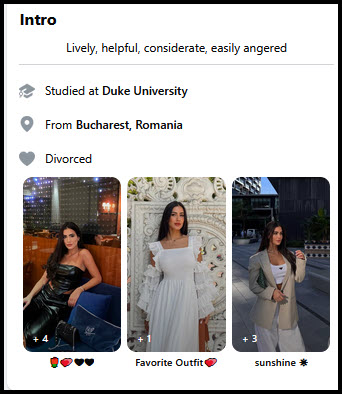
    Fake Facebook Profiles

    How You Can Protect Yourself

    • Don’t accept friend requests from strangers — no matter how attractive or professional their profile looks.
    • Watch for scripted messages that seem overly polite or oddly generic.
    • Never move conversations to WhatsApp or another messaging platform unless you personally verify the identity.
    • Don’t share personal or financial information with anyone online, especially in a first conversation.
    • Screen the Friend Request first by looking for these “fake profile” indicators. Small number of friends under 200, and only 1 to 5 friends in common. Beautiful photos that only have 0 to 10 likes and virtually no comments. Remember, the lower the number of connections, friends, likes means they have just recently created the profile (within a year) and not many people interact with them since they do not know them personally.
    • Report fake profiles — even if it feels futile. The more reports, the more likely Facebook will take action.

    Final Thoughts

    The emotional and digital cost of engaging with fake profiles is high — and growing. As someone who values authenticity, privacy, and meaningful connection, I feel it’s important to sound the alarm. As a consumer advocate working with millions of consumers over the past three decades, I find it disturbing that big tech firms such as Facebook are not doing more to reduce, minimize the millions of fake profiles such as these. Business Incentive: Meta has historically favored engagement over safety, and every profile (fake or not) drives activity metrics. Outside of these fake profiles, the more disturbing activity on Facebook is FAKE or Fraudulent Advertisements/Sale. which I have been reporting on for years. I’ll cover this more in another article.

    As for new friend requests, or Chat’s initiated by people you do not know, if you’ve experienced this pattern, you’re not alone. Let’s speak out, raise awareness, and help protect each other from this new form of online abuse. Remember, knowledge is KING! Your data is extremely valuable and the more information they have on you, your likes, dislikes, family, locations, age, income, occupations, etc. the more MONEY $$$ the scammers make from their data collection efforts. So even it they are not attempting to get you intimately attached to them, or planning on asking you to invest in their gold or crypto system, they may simply building a profile through the use of AI, Bots and Automated systems, and the next thing you know you have purchased a villa in the south of France that you never knew about. 🙁

    Let’s make our future interaction online safe, consumer friendly and profitable… for US, not them! 🙂 I invite you to join me as a member of our FarSuperior communities online, www.FarSuperior.com and learn more about you owning the Internet and not the other way around. God bless and may 2025 be the best year yet for you and yours. Wayne


  • Navigating the Digital Divide

    Navigating the Digital Divide

    The Impact of Limited Coverage on Independent News and Consumer Concerns

    In an era dominated by digital platforms and online information sharing, the role of independent news organizations and reporters in bringing to light critical consumer concerns has been pivotal. However, an alarming trend has emerged where search engines and social media platforms are reducing the coverage of these independent voices, resulting in a potential threat to informed public discourse and consumer empowerment. This article delves into the ramifications of reduced coverage and sheds light on the concerns raised by the public regarding limited access to significant independent news stories. Most recently here in August 2023, there is a buzz on social media where claims of both Google and DuckDuckGo taking steps to derank, or simply pull from any search results, anything dealing with independent media outlets. While this certainly would be devastating to free speech and the 1st Amendment rights of those publishing their news stories, this would become the dividing straw that would break the camel’s back once and for all with 50% of consumers worldwide.

    The Power of Independent News and Consumer Concerns: Independent news organizations and reporters have traditionally acted as the watchdogs of society, uncovering stories that major media outlets might overlook. They have been crucial in highlighting issues that resonate with the public, ranging from environmental crises and corporate malpractices to political corruption and public health concerns. These stories not only inform but also empower citizens to take action and demand accountability. A few examples are listed below.

    1. The Ice Bucket Challenge: A Cold Splash of Charity

    In the summer of 2014, a seemingly simple idea sparked a global phenomenon that raised awareness and funds for amyotrophic lateral sclerosis (ALS), also known as Lou Gehrig’s disease. Independent reporter Peter Frates, who was battling ALS himself, started the “Ice Bucket Challenge” to encourage people to pour a bucket of ice water over their heads and share the video on social media. What began as a grassroots campaign quickly gained traction, with celebrities, athletes, and everyday individuals joining in. The challenge not only raised over $220 million for ALS research but also shed light on a lesser-known disease and united people worldwide in a collective cause.

    2. Kony 2012: Igniting a Movement against an African Warlord

    In 2012, a 30-minute video created by filmmaker and activist Jason Russell turned the spotlight on Joseph Kony, the leader of the Lord’s Resistance Army (LRA) in Uganda. The video, titled “Kony 2012,” aimed to raise awareness about Kony’s crimes, including child abduction and use as child soldiers. The video went viral on social media platforms, garnering millions of views within days. While the campaign received both praise and criticism for its simplistic narrative, it succeeded in bringing international attention to a long-standing issue and led to increased pressure on governments and institutions to address the LRA’s actions.

    3. #MeToo: Unmasking Widespread Sexual Harassment

    In 2017, actress Alyssa Milano tweeted a simple request: “If you’ve been sexually harassed or assaulted write ‘me too’ as a reply to this tweet.” This tweet ignited the #MeToo movement, which had originally been coined by activist Tarana Burke in 2006. The movement gained immense traction on social media, with millions of women and men sharing their experiences of sexual harassment and assault. Independent stories of harassment shared by everyday individuals merged into a powerful collective voice, highlighting the pervasiveness of the issue across industries and inspiring a global conversation about consent, equality, and accountability.

    4. The Arab Spring: Citizen Journalism Shaping Political Change

    The Arab Spring, a series of uprisings and protests across the Middle East and North Africa in 2010-2011, saw the significant impact of citizen journalism in shaping the course of events. Ordinary citizens armed with smartphones documented and shared images, videos, and accounts of the protests, police crackdowns, and political upheaval. These independent reports bypassed traditional media gatekeepers and offered a raw, unfiltered view of the situation on the ground. The power of citizen journalism was exemplified in the case of Mohamed Bouazizi, a street vendor in Tunisia whose self-immolation in protest against police harassment sparked nationwide outrage and set off a chain reaction of protests.

    5. David Dao and United Airlines: Passenger Rights in the Spotlight

    In 2017, a video captured by a fellow passenger on a United Airlines flight went viral, showing Dr. David Dao being forcibly removed from an overbooked flight. The incident brought attention to the issue of passenger rights and the questionable practices of airlines when handling overbooked flights. The video, which spread across social media platforms, prompted a public outcry, leading to increased scrutiny of airline policies and a heightened awareness of passenger rights. The incident underscored the power of individual eyewitnesses armed with smartphones to hold corporations accountable for their actions.

    6. James O’Keefe and Project Veritas: Exposing Political Bias

    James O’Keefe, an independent conservative journalist, gained prominence through his organization Project Veritas, which aims to uncover corruption, political bias, and unethical practices within institutions. In 2019, Project Veritas released a series of undercover videos showing employees of tech giant Google allegedly discussing efforts to manipulate search results and influence public opinion. These videos sparked debates about online censorship, ideological bias, and the power of tech companies to shape information access. O’Keefe’s work continues to be both praised for its investigative journalism and criticized for potential selective editing.

    7. Benghazi Attack and Citizen Journalism: Unearthing Government Accountability

    The 2012 attack on the U.S. diplomatic compound in Benghazi, Libya, led to an independent investigation by a range of individuals, including conservative reporters and citizen journalists. Their inquiries uncovered discrepancies in the initial narrative provided by government officials regarding the nature of the attack and the response. Independent journalists like Sharyl Attkisson investigated the incident and raised questions about transparency, accountability, and potential political motivations behind the handling of the attack. The relentless pursuit of the truth by these individuals highlighted the role of independent reporting in scrutinizing government actions.

    In each of these examples, the power of independent reporters or everyday individuals to spark stories that resonate with the public and drive change is evident. Through the reach of social media and the viral nature of these narratives, issues that might have remained confined to local circles gained global attention, resulting in significant impact and influencing societal conversations. These stories highlight the potential for grassroots movements to effect change in a digital age where the public’s voice can no longer be easily silenced.

    The Changing Landscape: Limited Coverage by Digital Giants: However, the digital age has brought about a shift in how news is disseminated and consumed. Search engines and social media platforms, often seen as gatekeepers of information, have the ability to dictate which stories reach the masses. Algorithms designed to curate content based on user preferences and engagement can inadvertently sideline independent news stories that might not generate the same level of clicks or interactions as sensationalized content. This certainly is not an optimum way for consumers to find what they may be seeking online, when the narrative “search results” are driven or controlled by an SEO algorithm that was designed or based upon any form of bias or partisan point of view. This is why community organizations such as FarSuperior is always finding new and innovative ways to return search results that are value added and non bias.

    Public Concerns Over Limited Access: The reduction in coverage of independent news stories has ignited a wave of public concern, and rightfully so. Here are some key concerns raised by the public regarding limited access to crucial independent news coverage:

    1. Loss of Diverse Perspectives: Independent news organizations provide diverse viewpoints that counterbalance mainstream narratives. Reduced coverage results in a narrower spectrum of information, stifling public discourse and preventing well-rounded understanding.
    2. Diminished Accountability: Investigative reporting by independent journalists often uncovers wrongdoings that demand accountability from those in power. When these stories are marginalized, the checks and balances on powerful entities weaken, potentially allowing unethical practices to persist.
    3. Threat to Democracy: Informed citizens are essential for a thriving democracy. Limited access to independent news impedes citizens’ ability to make informed decisions, potentially skewing the democratic process.
    4. Consumer Disempowerment: Many consumer concerns stem from issues such as product safety, environmental impact, and corporate transparency. Independent news plays a critical role in raising awareness about these concerns and empowering consumers to make informed choices. Limited coverage erodes this empowerment.
    5. Echo Chambers and Polarization: Algorithms that tailor content to individual preferences can lead to echo chambers, where individuals are exposed only to information that aligns with their existing beliefs. This contributes to polarization and prevents open dialogue.

    Overcoming the Challenges: Addressing the concerns raised by limited coverage of independent news stories requires collaborative efforts from various stakeholders:

    1. Transparency in Algorithms: Search engines and social media platforms should be more transparent about the algorithms they use to curate content. This transparency can help users understand why certain stories are prioritized over others.
    2. Media Literacy Education: Promoting media literacy is crucial to empowering consumers to critically evaluate the information they encounter. By equipping individuals with the skills to discern reliable sources, the impact of limited coverage can be mitigated.
    3. Support for Independent Journalism: Public and private funding should be directed towards supporting independent journalism. Initiatives that provide grants, fellowships, and resources to independent reporters can ensure that their crucial work continues to thrive.
    4. Diverse Information Sources: Individuals should actively seek out diverse sources of information beyond their social media feeds. By diversifying their information intake, consumers can counteract the potential echo chamber effect.

    Conclusion: A Call for Balance and Responsibility: As digital platforms continue to reshape the way we access information, it is imperative to strike a balance between convenience and responsible information dissemination. Independent news organizations and reporters play an essential role in addressing consumer concerns and upholding democratic values. By acknowledging the concerns raised by limited coverage and taking proactive measures to ensure a diverse media landscape, we can safeguard informed public discourse and empower consumers to make impactful choices that shape our society’s future.

  • Safeguarding Your Digital Life

    Safeguarding Your Digital Life

    5 Essential Steps for Data Privacy and Security

    In an age dominated by technology, your personal data is becoming one of the most valuable commodities. As your consumer advocate, I’ve been in the trenches for over a decade, fighting against the data security breaches and the exploitation of consumer data by the giants of the tech world. You’re not just a person anymore; you’ve been reduced to a number, a dollar sign in the eyes of social media titans, email providers, search engines, and mega online retailers. While we all know the names of these behemoths, the real question is: What can you do today to safeguard your personal data and regain control of your digital life? Here are the five best steps you can take to fortify your data security and prevent your information from being auctioned off like a commodity.

    1. Fortify Your Passwords: Your first line of defense is a strong, unique password for each online account. Gone are the days when “123456” or “password” would suffice. Craft complex passwords with a mix of upper and lower case letters, numbers, and special characters. Utilize a reputable password manager to keep track of these intricate codes without compromising memorability.

    2. Enable Two-Factor Authentication (2FA): Two-factor authentication is a formidable shield against unauthorized access. This extra layer of security requires you to provide a second form of identification beyond your password, such as a fingerprint, a text message code, or an authentication app. Even if a hacker gets hold of your password, they won’t be able to breach your accounts without that second verification.

    3. Mind Your App Permissions: Apps on your smartphone often request access to various aspects of your device, such as location, contacts, and camera. Review these permissions and grant access only to what’s absolutely necessary. Apps with unwarranted permissions can potentially exploit your data.

    4. Embrace Encryption: Whenever possible, opt for encrypted communication. Encryption scrambles your data, making it unreadable to unauthorized parties. Messaging apps with end-to-end encryption and websites with HTTPS (look for the padlock in the address bar) ensure that your data remains private even if intercepted.

    5. Regularly Update Software: Regular software updates may seem mundane, but they play a crucial role in your data security. Hackers often exploit vulnerabilities in outdated software. By keeping your operating system, apps, and antivirus software up to date, you’re patching up potential security gaps.

    As the digital world continues to evolve, so do the strategies of those seeking to exploit your personal information. By following these five essential steps, you can take back control of your data and minimize the risks of falling victim to data breaches and cyberattacks. Remember, your data is yours – don’t let it be a pawn in the profit-driven game of tech giants. Empower yourself, protect your digital footprint, and ensure your privacy is safeguarded in this interconnected landscape. Together, we can reclaim our status as more than mere numbers in the eyes of the tech giants.

    One final step which involves a project I have been working on since 1999, is this. Join the FarSuperior Community which protects your personal data, does not allow for Advertisements, Spam or any abuse of consumer data. It is free to join and the businesses you find within its search engine that are Certified, or Verified, have been vetting by the team at FarSuperior.com. Run a search today and see all the great results you will find without giving up one single part of your privacy in the process.