Category: FarSuperior

  • The American Reset: Trump’s “Big Beautiful Bill”

    The American Reset: Trump’s “Big Beautiful Bill”

    How it aligns with FarSuperior’s Vision for a New Economic Era

    By Wayne Warrington | FarSuperior Insights | June 2025

    Ball of confusion and conflicting narratives — that’s what the world is today. The economy is no exception. For years, America’s small business owners and middle-class families have struggled under the weight of inflation, bureaucratic overreach, and digital platforms that harvest personal data without consent or reward. But amid the noise, a quiet revolution is gaining momentum.

    President Donald J. Trump’s “Big Beautiful Bill,” now advancing through the US Senate, is more than a tax policy — it’s a strategic reset designed to reinvigorate the American economy. And for communities like FarSuperior, it’s the validation of a belief we’ve held for decades: that prosperity can be decentralized, dignified, and returned to the people.

    This bill, crafted with surgical precision, outlines a nine-point plan for long-term economic stabilization. But what’s most remarkable is how its pillars resonate with the values and mechanisms already at work within the FarSuperior Community Model — our alternative ecosystem for small business, conscious consumers, and privacy-minded citizens.


    1. Certainty Creates Confidence

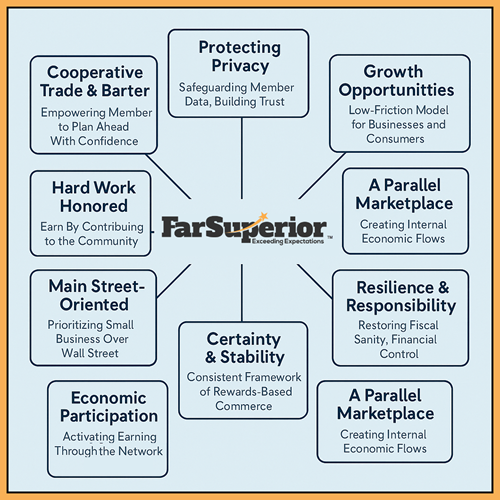
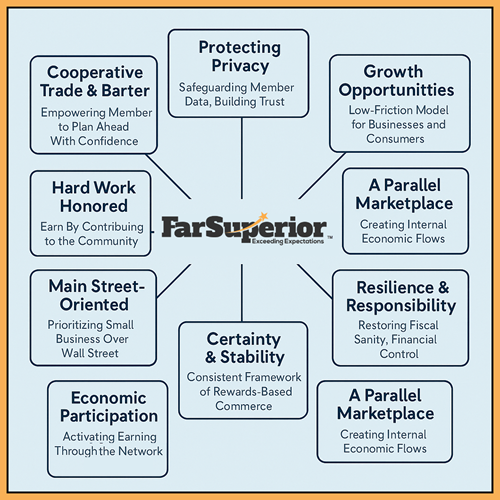
    By making the 2017 Trump Tax Cuts permanent, this bill ends the era of policy whiplash. Businesses and families can finally make long-term plans — to hire, invest, and grow. While Democrats claim that Trump’s agenda is to tax the middle class, his efforts and actions are the opposite. At FarSuperior, we echo this call for stability. Our ecosystem isn’t based on short-term gimmicks. We offer a consistent framework of cooperative trade, barter, and reward-based commerce that empowers members to plan ahead with confidence.


    2. Protecting the Paycheck

    The elimination of taxes on tips and overtime puts real money back into the hands of working Americans. It’s not just a tax break — it’s a declaration that hard work should be honored, not penalized. This dovetails with FarSuperior’s member incentives: when you contribute, refer, or trade in the community, you earn. We honor effort with economic reward — not handouts, but opportunity. The only piece of the elimination on taxes, is the tax on Social Security benefits, which to this writer is a crime against our elderly.

    “Social Security was never meant to be taxed—but now many middle-income retirees are losing up to 85% of their benefits to the IRS. That’s why FarSuperior created a tax-free dividend and rewards program—to help restore financial dignity and control to our members in retirement.”
    — Wayne Warrington, Founder of FarSuperior


    3. Main Street Over Wall Street

    This bill prioritizes small businesses — America’s economic backbone — by removing red tape and expanding capital access. At FarSuperior, we built an entire infrastructure for local entrepreneurs to thrive without relying on gatekeepers. Our platform is a Main Street-first ecosystem, where local trades, partnerships, and community-based growth take center stage.


    4. Restoring Fiscal Sanity

    The rollback of COVID-era spending programs signals a return to responsibility. Likewise, FarSuperior members learn to reclaim control over their financial lives — not by waiting for stimulus checks, but by activating earning potential through participation in the network. Structured, principled, and fair — that’s how we grow together.


    5. Revenue from Resilience

    Trump’s use of tariffs to bring in over $200 billion annually — even as Washington ignores the data — is a lesson in alternative revenue generation. Similarly, FarSuperior’s model creates internal economic flows through member trade, advertising exchanges, and rewards. We are building a parallel marketplace where value is created and shared, not siphoned off by middlemen.

    6. Tackling the Deficit from the Ground Up

    While D.C. argues over numbers, this bill begins to slow the fiscal bleeding. But real deficit correction starts at the household level. Our cooperative platform reduces financial dependency by helping members save money, earn rewards, and monetize data they already produce every day.


    7. Unleashing Growth Through Deregulation

    Overregulation is a hidden tax. Trump’s bill cuts this burden, freeing industries to thrive. FarSuperior embraces a low-friction model where businesses connect directly with customers, use simplified platforms, and operate without the crushing costs of digital gatekeepers or data brokers.


    8. Safeguarding the System

    The bill also shores up the Treasury market by enabling U.S. banks to absorb more debt and prevent auction failures. At FarSuperior, we take a similar approach to digital trust — by safeguarding member privacy, protecting data, and building resilient internal systems, we insulate our users from external shocks and surveillance capitalism.


    9. Planning for 2026 and Beyond

    Make no mistake: this bill is a prelude to a broader transformation. It prepares the ground for 2026 — a potential new era of fair trade, deregulation, and tax simplicity. And FarSuperior is already there. We are not just reacting to policy; we are building the next economy today — one trade, one reward, one connection at a time. We are building upon our original 1999 Business Model with today’s AI being controlled by FarSuperior’s Responsible AI system, and incorporating our “Back to Basics” sales process which keeps the human element as a mission critical part of the community structure.


    The Path Forward

    The mainstream media may dismiss this legislation as political theater. But at FarSuperior, we see something different: the outline of a national comeback — and a reflection of the work we’ve already begun. Talk about being divinely guided to protect God’s children. 🙂

    The American economy doesn’t need more slogans. It needs actionable systems that restore dignity, self-reliance, and community wealth. Trump’s “Big Beautiful Bill” lights the fuse on a larger reset — and FarSuperior is prepared to carry that torch forward, into every town, neighborhood, and business across the country.


    Are you ready to stop renting your data, start owning your economic potential, and become part of the real American revival?

    Join the FarSuperior Movement — where privacy meets prosperity. TEXT the word REVIVAL to 802-430-6322 Today!
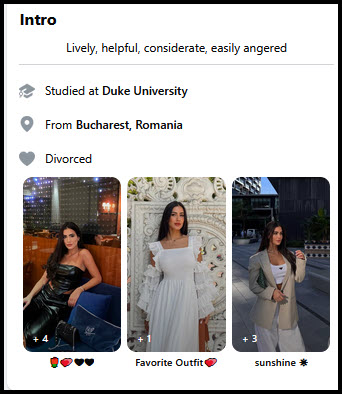

  • The Rise of Fake Profiles on Facebook

    The Rise of Fake Profiles on Facebook

    A Warning to Professionals and Mature Users

    Over the past few years, I’ve noticed a disturbing and increasingly aggressive trend on Facebook — and it’s something more people should be talking about.

    As a business professional in my 60s, I’ve always enjoyed connecting with peers, entrepreneurs, and like-minded individuals through social media. But what began as the occasional suspicious friend request has grown into a weekly — sometimes daily — flood of messages from profiles that are almost certainly fake.

    At first glance, these profiles often seem legitimate: attractive women claiming to be successful fashion entrepreneurs or investors, often located in major U.S. cities like Los Angeles, New York, or even my home state. Their friend request comes with a soft, seemingly harmless message like:

    “I was a little curious when I saw you appear in my friend recommendations, so I added you without knowing why. I hope I didn’t disturb you, and I’m sorry.”

    Sounds polite, right? But what follows is anything but innocent.


    The Conversation Trap

    Once you accept the request or reply, the dialogue begins. And it always follows a pattern:

    • They ask about your age, location, and occupation.
    • They claim to be “curious” about your business success, and would love to be mentored by you.
    • They express a feeling of personal connection with you, and the age difference is never an issue for them.
    • They often pivot quickly to discussions about investing, usually in gold or cryptocurrency.
    • They try to move the conversation to WhatsApp almost immediately. In one case I forced the communication to a more secure platform “Signal” explaining I can NOT use WhatsApp for privacy reasons. When the “fake profile person” agreed to set up a conversation on Signal, it appeared under a totally different name, which she claimed to be her mother’s account. 🙂
    • They never want to speak on the phone, or simply avoid phone conversations where you would be able to have a point of reference or contact info that law enforcement can use against them.
    • They often claim to be originally from Europe or Russia, but now live in the U.S.

    And if you share anything remotely personal — such as your interests, lifestyle, or family — they latch on and begin chatting with increased frequency. Soon, you’re fielding messages throughout the day.

    It’s not just an annoyance — it’s an outrageous waste of time and, worse, a serious threat to your digital privacy.


    The Real Danger: Social Engineering

    These aren’t lonely hearts looking to connect. They’re part of organized efforts to extract personal data, build psychological profiles, and possibly target victims for fraud, scams, or blackmail.

    They want to know:

    • What you like and dislike
    • Who your family members are
    • Whether you have children
    • Your exact age
    • Whether you own a business
    • What you invest in or how you make money

    In short, they’re building a digital dossier that can be sold, reused, or exploited in various forms of cybercrime. This is social engineering — not conversation.


    Why Isn’t Facebook Stopping It?

    Despite Facebook’s vast resources and AI systems, fake accounts continue to flourish. Here’s why:

    • Fake profiles are made to look authentic — with real photos (often stolen) and believable bios.
    • Scammers send personal 1-on-1 messages that bypass mass-spam filters.
    • They exploit the “People You May Know” feature to get into your social circles.
    • And Facebook, frankly, has a poor track record when it comes to proactive moderation.

    Fake Facebook Profiles

    How You Can Protect Yourself

    • Don’t accept friend requests from strangers — no matter how attractive or professional their profile looks.
    • Watch for scripted messages that seem overly polite or oddly generic.
    • Never move conversations to WhatsApp or another messaging platform unless you personally verify the identity.
    • Don’t share personal or financial information with anyone online, especially in a first conversation.
    • Screen the Friend Request first by looking for these “fake profile” indicators. Small number of friends under 200, and only 1 to 5 friends in common. Beautiful photos that only have 0 to 10 likes and virtually no comments. Remember, the lower the number of connections, friends, likes means they have just recently created the profile (within a year) and not many people interact with them since they do not know them personally.
    • Report fake profiles — even if it feels futile. The more reports, the more likely Facebook will take action.

    Final Thoughts

    The emotional and digital cost of engaging with fake profiles is high — and growing. As someone who values authenticity, privacy, and meaningful connection, I feel it’s important to sound the alarm. As a consumer advocate working with millions of consumers over the past three decades, I find it disturbing that big tech firms such as Facebook are not doing more to reduce, minimize the millions of fake profiles such as these. Business Incentive: Meta has historically favored engagement over safety, and every profile (fake or not) drives activity metrics. Outside of these fake profiles, the more disturbing activity on Facebook is FAKE or Fraudulent Advertisements/Sale. which I have been reporting on for years. I’ll cover this more in another article.

    As for new friend requests, or Chat’s initiated by people you do not know, if you’ve experienced this pattern, you’re not alone. Let’s speak out, raise awareness, and help protect each other from this new form of online abuse. Remember, knowledge is KING! Your data is extremely valuable and the more information they have on you, your likes, dislikes, family, locations, age, income, occupations, etc. the more MONEY $$$ the scammers make from their data collection efforts. So even it they are not attempting to get you intimately attached to them, or planning on asking you to invest in their gold or crypto system, they may simply building a profile through the use of AI, Bots and Automated systems, and the next thing you know you have purchased a villa in the south of France that you never knew about. 🙁

    Let’s make our future interaction online safe, consumer friendly and profitable… for US, not them! 🙂 I invite you to join me as a member of our FarSuperior communities online, www.FarSuperior.com and learn more about you owning the Internet and not the other way around. God bless and may 2025 be the best year yet for you and yours. Wayne

  • Passion vs. Emotion in Politics

    A Defining Divide in America Today

    Last night, President Trump delivered an inspiring and forward-looking address to Congress, highlighting a long list of achievements in just his first 45 days in office. It was a speech filled with optimism, accountability, and a vision for America’s future—one that resonated with millions across the country.

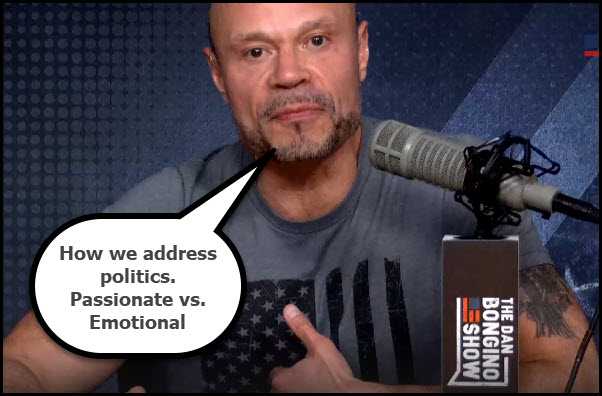
    The day after, political commentator Dan Bongino made a critical observation: Republicans are approaching this moment in history with passion, while Democrats are responding with emotion.

    This distinction is crucial in understanding the growing divide in American politics. Passion fuels a sense of purpose, a drive to enact real change, and a commitment to debating the issues with conviction and integrity. Emotion, on the other hand, often leads to reactionary responses, resistance to dialogue, and an unwillingness to acknowledge progress when it does not align with a particular agenda.

    A stark example of this contrast was seen throughout the President’s speech. As he introduced individuals and families who had suffered personal losses due to the failures of past administrations—whether it was due to weak border policies, crime, or bureaucratic inefficiencies—the chamber was filled with applause and heartfelt support. That is, except from the Democrats, who sat in defiant silence.

    The most striking moment of the night was when the President recognized a 13-year-old brain cancer survivor, DJ Daniel, sitting in the gallery. A young boy whose resilience and strength had led him to dream of serving in law enforcement.

    When President Trump directed the head of the Secret Service to present him with an honorary commission and badge, the chamber erupted in applause, with many moved to tears. But the Democrats refused to even acknowledge the moment. They sat in their seats, arms crossed, unwilling to celebrate the triumph of a child who had endured so much.

    This is the divide we see today. One side approaches governance with passion, fighting to restore fiscal responsibility, eliminate waste, secure the nation, and promote economic prosperity. The other side, driven by emotion, resists and rejects—even at the cost of honoring a child who embodies the very spirit of perseverance and service to country. I do not wish to make this a sweeping statement that assumes all members of the Democratic party are unwilling to have an open dialog, nor that they are void of any compassion for the families across the country that have lost love ones to the criminal element that has come across our border illegally, I simply can’t imagine that their party is all one sided in this humanitarian element of our country, however last night there was virtually no evidence of a sitting Democrat member of congress that was willing to show support for our brave citizens, our families with losses, or even a child that has battled so hard and long with a life threatening disease.

    I firmly believe that passion is what drives progress, while unchecked emotion only deepens division. Passion allows for open debate, the exchange of ideas, and the ability to tackle tough issues with courage and conviction. Emotion, however, often closes the door to conversation, replaces discourse with outrage, and ultimately hinders meaningful progress. America is at a cross roads today. We are in a recovery mode from, IMHO of course, 4 years of mismanagement, corruption within the Administration, abuse by the Justice Department and Congress itself. If we do not face the challenges we have, the divide we are experiencing, with compassion for one another, and with an open heart and dialog towards a prosperous future, well our core values and foundational strength are at risk.

    As we move forward as a nation, we must ask ourselves: Do we want our conversations to be fueled by passion and commitment to the American people, or one dictated by fleeting emotions and obstruction?

    The choice is clear. Passion builds. Emotion divides. And the future of our nation depends on which path we choose.

    Thank you by friends for taking the time to read my thoughts here, as well as the time to think through the message itself. Also, my thanks to someone I admire greatly from this law enforcement career as well as his commentary and voice to all Americans, Dan Bongino. This article was inspired by Dan’s commentary today.

  • They Have Won the Battle!

    But Together, We Can Win the War!

    In America, and in many countries around the world, we find ourselves in a state of virtual civil war—not with foreign enemies, but among our very own neighbors and even within our own families. This deep division didn’t happen overnight, nor did it emerge through logical progression within the framework of our country’s model or design. Instead, the condition we find ourselves in mirrors the stated objectives of two powerful outside forces, both harboring ill intentions toward the people of the United States of America.

    The Communist Infiltration: A Silent War

    In the 1960s, a Communist manifesto was read into the Congressional Record, revealing a chilling blueprint to destroy America from within, without ever firing a shot. The strategy was not to attack America’s military might or economic prowess directly but to infiltrate and undermine its institutions—education, courts, political bodies, media, and entertainment. This slow, methodical approach aimed to erode the foundations of American society, culture, and governance from the inside out.

    Ronald Reagan: “Freedom is never more than one generation away from extinction. We didn’t pass it to our children in the bloodstream. It must be fought for, protected, and handed on for them to do the same, or one day we will spend our sunset years telling our children and our children’s children what it was once like in the United States where men were free.”

    Over the past 60 years, we have witnessed the gradual realization of these objectives. Our educational institutions, once proud bastions of independent thought and free inquiry, have become battlegrounds for ideological indoctrination. Our courts and political bodies, designed to serve the interests of the people, now often reflect the agendas of those with anti-American sentiments. Media and entertainment, which should foster diverse perspectives and dialogue, frequently promote narratives that undermine our values and sow discord.

    These developments represent “the battles we have lost.” The steady advance of these objectives, unchecked and largely unnoticed, has brought us to a critical juncture. It is a silent war, fought not with guns and bombs, but with ideas, influence, and propaganda.

    The Financial Elites: A Parallel Threat

    During this same period in the 1960s, another faction with its own sinister designs also targeted America. This group, comprising powerful bankers and financial elites, has for centuries controlled governments and countries through the manipulation of financial markets and even the funding of wars. Their goal is not merely to profit from global conflict and economic turmoil but to reshape the world according to their vision—one in which they hold absolute power.

    Henry Ford – “It is well enough that people of the nation do not understand our banking and monetary system, for if they did, I believe there would be a revolution before tomorrow morning.”

    Today, we see the disturbing realization of this vision. The middle class, particularly the entrepreneurial and small business class that has been the backbone of American prosperity and innovation, is under siege. The concentration of wealth and power in the hands of a few “super elite” is reaching unprecedented levels. The economic policies and practices being pushed forward seem designed to dismantle the economic freedoms that have defined the American Dream. The ultimate objective appears to be the creation of a two-tiered society: the super-wealthy elite who own and control all land, resources, governments, and energy, and a worker class who “own nothing and are happy,” as envisioned in their dystopian ideal.

    The Modern Manifesto: The WEF and the 2030 Agenda

    Compounding these threats is the World Economic Forum’s (WEF) 2030 agenda, which promotes a global economic “reset.” This agenda appears to align disturbingly with the goals of both the Communist infiltrators and the financial elites. The WEF advocates for a future where traditional notions of ownership, privacy, and personal autonomy are radically redefined. Under the guise of sustainability and economic fairness, their agenda pushes for centralized control over resources and energy, increased surveillance, and diminished national sovereignty.

    This agenda’s implications for the American way of life are profound. Our cherished values of individual freedom, private property, and self-governance—enshrined in the U.S. Constitution—are directly threatened by these globalist ambitions. If left unchecked, these forces could fundamentally alter the nature of our Republic and Democracy, transforming us into a nation that bears little resemblance to the land of the free and the home of the brave.

    Thomas Jefferson: “I believe that banking institutions are more dangerous to our liberties than standing armies. If the American people ever allow private banks to control the issue of their currency, first by inflation, then by deflation, the banks and corporations that will grow up around the banks will deprive the people of all property until their children wake up homeless on the continent their fathers conquered.”

    Restoring the Health of Our Nation: A New Path Forward

    One of the most encouraging developments in recent times is the emergence of the UNITY alliance, championed by President Trump and Robert F. Kennedy Jr. this month. This alliance, aimed at uniting the American people for a healthier future, is both inspiring and timely. With Robert F. Kennedy Jr.’s unwavering commitment to reversing America’s alarming health decline, there is hope for building a stronger, healthier nation—starting with our children and grandchildren.

    America’s declining health is not a natural occurrence; it is a direct consequence of the powerful elite’s control over our food supply, farms, and ranches. They have redesigned even our basic food pyramid in ways that promote early onset of diabetes and obesity. Today, America is the unhealthiest among the most advanced nations in the world. We consume more pharmaceutical drugs per capita than any other country, and our fast food and processed foods are loaded with chemicals rather than natural ingredients.

    Robert F. Kennedy Jr.: “The greatest crisis that America faces today is the chronic disease epidemic in children. The sickest generation in American history. My generation, when I was a kid, 6% of Americans had chronic disease, by 1986, 12.8%. Today, 54% of children have chronic disease, and none of these disorders are genetic. They’re caused by environmental exposures.”

    Instead of embracing the natural, God-given design of the human body and advocating for wholesome foods and natural remedies to address illnesses and bodily imbalances, Western medicine often takes a different approach. Doctors in our healthcare system frequently prescribe medications that merely mask symptoms, rather than promoting true healing. This has led to a healthcare industry that dominates our family budgets and seems more focused on maintaining dependency on hospitals, pharmaceuticals, and ongoing medical care rather than empowering individuals to heal themselves through proven, natural methods.

    While there is no doubt that Western medicine has made significant advancements, particularly in emergency care and the treatment of injuries, it is crucial to recognize that the overall health and healing of our bodies can—and should—be nurtured through natural processes. The key to a healthy body lies in achieving a balanced state of homeostasis. As Americans, we must reclaim our right to choose the types of treatment and healing methods we prefer, including alternative medicine practices that support genuine healing rather than merely masking pain with drugs.

    My goal, as a consumer advocate, is to challenge and rein in the power and oversight of the FDA, which has often been misused to suppress natural healing methods and alternative medical protocols. These methods have proven their worth time and again, providing positive health benefits to people around the world. By supporting the UNITY alliance and its vision for a healthier America, we can not only reclaim our nation’s health but also take a significant step toward winning the broader war against those forces that seek to undermine our freedoms and way of life.

    I find it curious that the Biden-Harris administration has proposed several measures to reduce drug costs for Americans, including Medicare Drug Price Negotiation, Inflation Rebates, Expanding Access to Affordable Medications and more, yet nothing, no positive movement to realigning America’s focus from popping pills, to addressing the root cause of illness (i.e. processed foods, chemical additives to our natural food supply). Let’s call it like it is … there is no profit from achieving a healthy population, to the major donors of politicians that control our food chain. To me this is one of the biggest crimes of all.

    The Call to Action: Winning the War

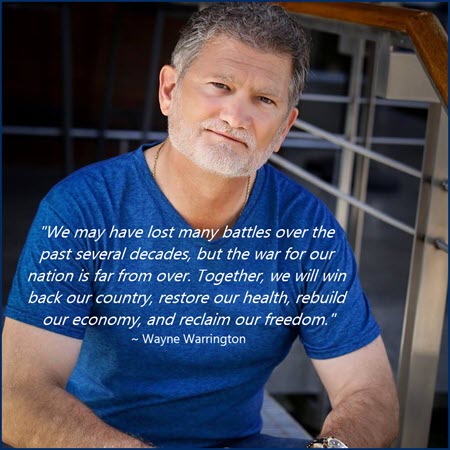
    But all is not lost. While they may have won several battles, the war is far from over, while they have brought the battles to our cities and towns such as Aurora Colorado, it is far from being over. It is time for Americans to wake up, recognize the threats before us, and rally together to defend our country. This battle is not just about protecting our borders or our economy; it is about preserving our culture, our freedoms, and our way of life.

    We must recommit ourselves to the principles that have made America great—faith, family, hard work, and freedom. We must take back our institutions, reclaim our culture, and restore our Republic to its foundational values.

    Let us not be lulled into complacency by the comforts of modern life or the promises of utopian visions. Let us instead be vigilant, informed, and proactive. Together, we can win this war—not just for ourselves, but for future generations of Americans who deserve to inherit a nation that remains a beacon of hope, liberty, and opportunity.

    The fight is not over. They may have won the battle, but with courage, unity, and determination, we can and will win the war.

    Wishing all my family, friends and supportive members of God’s FarSuperior Community, peace, happiness and great health.

  • Consider your perspective…

    Consider your perspective…

    before you allow your reality to be that of the masses.

    What a wonderful and amazing Thanksgiving meal yesterday. For well over ten years now, I have been cooking holiday meals for family and friends, also known as ‘Friendsgiving,’ and have been blessed to serve over 65 people at one point a few years ago.

    However, yesterday was quite different. Only a small group of friends were able to join in, and a host of those who RSVPed did not make it at all. Plus, it was a Thanksgiving without my kids being there. Seasonal illness, living far away, and some not-so-seasonal separation issues with two of my children still make the holidays feel a bit vacant.

    While I shared holiday greetings over the phone and in text from my other two children, and I enjoyed the smaller group of friends and the great conversations we shared yesterday, I still found myself thinking and missing my two estranged children that have decided it is no problem to ignore the love and holiday greetings of their father.

    With those thoughts being present, not only on Thanksgiving day but virtually every day of the year, I found comfort through God’s word concerning family separations, disagreements, and even ill will for many who are faced with similar family losses. I have even been truly blessed to be able to mentor other parents dealing with the pain of children that have walked away from their family relationships.

    During these mentoring times, conversations almost always include thoughts like, ‘What did I do wrong?’ ‘Why do my children hate me, or simply want to hurt me in this way?’ While our reality is not the same as the reality of our children, in my mind, I find it impossible to understand the thought process in which a child—grown adult—simply one day decides to cut ties and all communications with their parent. At least I did until today.

    This morning, I was reading in Luke Chapter 12. Jesus was speaking to His disciples, and in verses 51 through 53, He reminded them that He had come not to bring Peace but Division. This title in Chapter 12 was quite the eye-opener, since with me, I feel and receive nothing but God’s peace—the peace that only Jesus can provide.

    However, Jesus was referring to the end times and the time in which even families would be divided. ‘From now on there will be five in one family divided against each other, three against two and two against three. They will be divided, father against son and son against father, daughter against mother and mother against daughter…’

    This division is not caused by the love, or lack thereof, between family members; it is caused by the lack of love they have for the Lord our God. God calls us to love one another, imperfect as we are, just as He loves us. If we did this, there would be no division within our family, and I am not speaking of conflict or disagreements; those things we will have until the end of time. What we do find through our love of Jesus, His peace and the saving grace we receive is two fold. One an open dialog with the family member, and two….. forgiveness.

    MY PERSPECTIVE, up until today, has been that of a loving father. Not a perfect father, but truly a loving father of four children, each of whom I love dearly, am proud of each, and am respectful of each for who they have become in this world. Basically, I do not see any of my children differently, for each of them received a part of my heart as they came into this world and took their first breath.

    However, my eyes were opened today as God’s words filled my heart and mind. Simply put, a light bulb went off in my head, and I could clearly see what the struggle is all about. In 2009, I entered my walk with God and spent some 7 years training for ministry work. All my children were already young adults and had chosen their paths. Today, two of my children are on their respective paths, which include their walk with God. The other two, both fun, intelligent, loving family/married men, are on their paths which do not include a relationship with God. Clearly, this was God’s warning to us in Luke 12:52-53.

    While I am writing in part about the separation of family members through our individual sense of reality and perspective, this same philosophy applies to every relationship we have in the world today. Business, friendships, family, and community. We are not only divided and looking at the world through the lenses of our own reality, we can at the same time be listening to the wrong voices that are driving us further and further apart. The pandemic was the tipping point, the trigger if you will, for the division in the world allowing the good to see the evil oppression taking full root into our lives. So I wish to leave each of you with the following thought I had this morning.

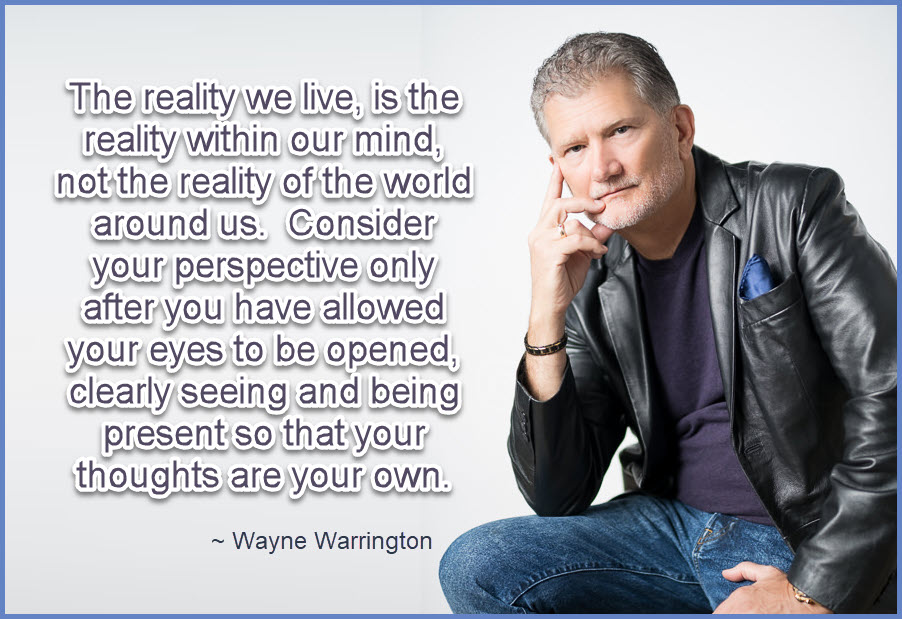
    The reality we live, is the reality within our mind, not the reality of the world around us. Consider your perspective only after you have allowed your eyes to be opened, clearly seeing and being present so that your thoughts are your own.

    Wishing all my reader and your families a wonderful, healthy, happy and peaceful holiday season. Looking forward in seeing you all on the other side of 2023. ~ Wayne Warrington

  • Money Matters

    “Money Matters: Unveiling Generational Spending Trends and Market Manipulation”

    Generational Differences in Consumer Spending Patterns is a real issue today. And how our markets are being manipulated by three (3) of the largest financial giants in the world, strangely enough which are all controlled by the same people, is even more important as we come to understand the end game they have in mind for us! Remember this statement, “You will own nothing, and be happy!”

    Analyzing the Shifting Trends in Expenditure Habits:

    Consumer spending habits have evolved significantly over time, influenced by changes in technology, economic conditions, and societal values. As different generations coexist in the present-day market, understanding their distinct patterns of expenditure is crucial for businesses and policymakers alike. My research aims to investigate how different generations, including Baby Boomers, Generation X, Millennials, and Generation Z, differ in their approaches to spending money and the underlying factors driving these differences.

    By recognizing and comprehending these generational disparities, organizations can fine-tune their marketing strategies and develop targeted solutions to cater to the specific needs and preferences of each generation.

    Questions we should address:
    1. In what ways do generational differences influence consumer spending patterns?
    2. What are the primary factors that motivate Baby Boomers, Generation X, Millennials, and Generation Z to spend money?
    3. How does the impact of technology on consumer behavior differ among generations?
    4. How do generational experiences (e.g., economic environments, major events) shape spending habits?
    5. Which industries are most affected by the divergent spending behaviors exhibited by different generations?
    6. How can businesses adapt their marketing strategies to accommodate the varying spending habits of different generations?
    7. What are the implications of generational spending differences for policymakers and economic planning?

    Methodology: To achieve a comprehensive understanding of generational differences in spending behavior, a mixed-methods approach will be employed. The research will consist of both quantitative and qualitative analyses, including surveys, interviews, and analysis of secondary data (such as national consumer expenditure surveys and economic reports). A sample population will be drawn from diverse age groups and regions to ensure representation. Expected Findings: Findings from this research endeavor will shed light on the distinct preferences, priorities, and motivations that influence spending patterns across different generations.

    Conclusion: Understanding how different generations move and spend money differently is essential for businesses, economists, and policymakers to adapt their practices effectively. Having answers to these questions will contribute to the growing body of knowledge on consumer behavior, providing actionable insights to enable organizations to develop marketing tactics catering to the diverse needs and preferences of each generation. My hope would be these insights will promote a more inclusive and effective economy that serves the financial interests of all generational cohorts.

    Market Manipulation: Here is where we hit the brick wall as consumers. Understanding the markets based upon generational influences as I outlined above, is for the most part something we have had to deal with for … well… generations. However, market manipulation has for the most part been seen with only a regional or partial impact, or within one industry at a time. Today, virtually every market we purchase from as consumers is being manipulated “controlled” by some very strong International companies. Black Rock, State Street and Vanguard. By some reports, these companies collectively control over 88% of the markets. What they do not directly control is small business, locally owned and consumer/community friendly businesses. However, as with all monopolies, once you own 88%, you really can’t resist buying up, or tearing down, the remaining 12%. Playing the board game “Monopoly” as a young boy, I remember the thrill “objective” of purchasing all the railroads, the Boardwalk and Park Place, along with putting all those houses and hotels on the properties just before those prime pieces of real estate which resulted in becoming the only player left owning anything and everyone else owing me. While this was definitely a thrill as a young boy, I can honestly, at this stage in life, say it is not a sustainable, fair or open marketplace when no one can afford to buy a property, or even rent “land” on one that is owned by someone that can set the rents above anyone’s ability to pay and still remain “happy”.

    One of the markets they are focusing on this year and in 2024 is the single family home market. A part of this single family home market is the very lucrative Airbnb market which was initially founded in 2008 and designed to add income to small home investors, families and the like. Airbnbs are now being pushed into higher regulation and taxation across the country, primarily in “Blue States” and so there are 200,000+ homes in this category that are prime for acquisition in the next 18 months or so. These properties, along with the middle ground homes in the $250k to $450k range are being targeted for corporate inventory which means home ownership will be out of reach for millions of Americans that would normally be buying their first home in the next few years, and former Airbnb owners that counted on that little extra income each year to support their retirement, or even help cover the inflationary added weight on their shoulders…well they will be forced to give up on that dream as well.

    So what happens when the residential real estate market has an extra hundred thousand homes enter the market, when interest rates are climbing and income/credit is declining for the generation of first time home owners? Well you can count on whatever it is, it will be bad news for those prospective buyers and good news for the financial giants buying up all the homes.

    Back to the generational elements we need to address, and keep in mind the above real estate market changes we are about to encounter. Let’s look at the breakdown by each generation and how their spending and investments are defined.

    In the ever-evolving landscape of finance, understanding how different generations manage their money sheds light on societal shifts, economic trends, and the impact of technology. From the frugal traditionalists to the tech-savvy Gen Z, each generation brings a unique approach to spending, saving, and investing.

    1. Traditionalists (born 1928-1945): Background: Growing up during times of economic uncertainty, traditionalists value financial security and stability. Spending Habits:

    • Prefer cash transactions and distrust electronic payments.
    • Tend to be conservative investors, favoring traditional savings accounts and bonds.
    • Emphasize saving for retirement and homeownership.

    2. Baby Boomers (born 1946-1964): Background: Witnessed economic prosperity and social change, influencing their financial outlook. Spending Habits:

    • Often prioritize homeownership and view real estate as a sound investment.
    • Comfortable with credit cards but generally avoid excessive debt.
    • Focused on retirement planning and healthcare expenses.

    3. Generation X (born 1965-1980): Background: Experienced economic downturns and the rise of dual-income households. Spending Habits:

    • Embrace credit cards for convenience but exercise caution to avoid debt.
    • Value experiences and are willing to spend on travel and leisure.
    • Tend to be entrepreneurial and open to diverse investment options.

    4. Millennials (born 1981-1996): Background: Grew up amidst technological advancements and faced the impact of the 2008 financial crisis. Spending Habits:

    • Embrace digital payments and prefer mobile banking apps.
    • Prioritize experiences over possessions, driving the experience economy.
    • Tend to be more open to investment in cryptocurrencies and socially responsible funds.

    5. Generation Z (born 1997-2012): Background: Born into a fully digital world, Gen Z is characterized by tech-savviness and global awareness. Spending Habits:

    • Embrace fintech solutions and are comfortable with cryptocurrencies.
    • Value sustainability and seek brands with ethical practices.
    • Exhibit a strong entrepreneurial spirit, with side hustles and gig economy involvement.

    Summary: While traditionalists prioritize financial security, baby boomers focus on homeownership and retirement. Generation X values experiences and is more open to entrepreneurial ventures. Millennials, influenced by technology and social consciousness, prefer digital payments and sustainable investments. Gen Z, the first true digital natives, embraces fintech and prioritizes ethical consumption.

    Understanding these generational spending trends is crucial for businesses, policymakers, and financial institutions to adapt their strategies to cater to the evolving needs and preferences of each generation. As technology continues to shape the financial landscape, bridging the gap between generations becomes essential for a more inclusive and responsive financial ecosystem. And of course taking into consideration the manipulation of the various markets, such as real estate, by the big three financial giants, which if I forgot to mention 🙂 are really just one ownership of three entities 🙁 , well I think you know where we are headed in 2024. So I do have a suggestion, a recommendation if you will, and it involves a shifting in the generational wealth and maybe the option of NOT selling out to the Big 3! If you would like to explore this option, let’s talk privately.

    Remember my friends… Together we CAN make a difference! God bless and stay safe. Wayne

  • We the People

    What’s on my mind? America! Our rights are being stripped away, one right after another. I was born and raised in a Republican family, with members of our family and close friends serving in the White House, Congress, and the US Senate. Today, the system is broken, and it is not the fault of either the Republicans or the Democrats. It is the evil in this world that is pushing us to the brink of demise. So, I pose this question to everyone reading this: Isn’t it time we put partisan politics aside and FIX our country? Let’s come back to the center, have logical, open, and spirited debates/discussions over the important issues, and move away from a far-left/far-right, no one-wins approach to the future of our country. For God’s sake, this is the only way our children and their children will live in a free country for generations to come.

    The three words in the above title are powerful when written together. At least they are in my mind. However, I have to remind myself that I grew up in a time where we respected our country, our men and women in uniform, our congressional leaders, our spiritual leaders, and our flag. We recited the Pledge of Allegiance every morning as we started our day at school. We prayed and gave thanks over our food before eating, and prayed before we placed our heads on our pillows for the night. I was raised in a different time than what many are experiencing today. I thought, for the most part, that I raised my children with these same values; however, I am sure I fell short at times.

    We can still right the ship. We can still protect our children and grandchildren, and we can still be loving, kind, compassionate, and far from perfect humans as God designed us to be. Our imperfections were strategically a part of our Creator’s design. If each of us were perfect, we would never need the support/guidance of one another, nor would we need God to be there to pick us up when we fall.

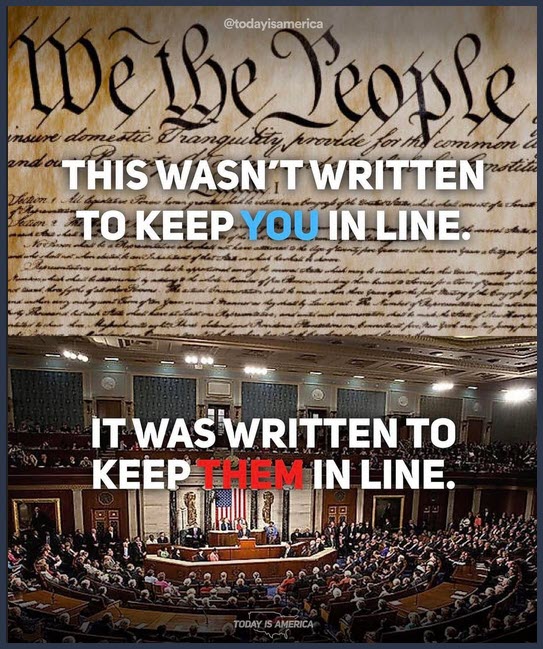
    The bottom line here, just my humble opinion, which I refer to as “Wayne’s Take,” is this. We the People not only have rights afforded to us under our Constitution, but we also have obligations to one another. We are obligated to hold accountable all those who may have strayed from their sworn duties as elected officials. We need to demand that they uphold our Constitution, preserve and protect our Constitution, and fulfill the promises they made to us, We the People, when we entrusted them with the positions we elected them to serve. If any elected official fails to uphold and protect our Constitution and listen to our calls for them to serve in a manner that aligns with their commitments to the people they represent, then we have an obligation to remove them from office. If any elected official, or any government appointee or employee, were to abuse the power or authority “We the People” have delegated to them, then they should be removed from office and, if appropriate based upon their actions, prosecuted to the fullest extent of the law.

    Just my take here. However, I am starting to see many more American are feeling the same way.

    Please reach out to me if you have desire to help right the ship and bring America back on course. May God bless America and protect us this day and always from oppression and from the evil in this world.

  • Navigating the Digital Divide

    Navigating the Digital Divide

    The Impact of Limited Coverage on Independent News and Consumer Concerns

    In an era dominated by digital platforms and online information sharing, the role of independent news organizations and reporters in bringing to light critical consumer concerns has been pivotal. However, an alarming trend has emerged where search engines and social media platforms are reducing the coverage of these independent voices, resulting in a potential threat to informed public discourse and consumer empowerment. This article delves into the ramifications of reduced coverage and sheds light on the concerns raised by the public regarding limited access to significant independent news stories. Most recently here in August 2023, there is a buzz on social media where claims of both Google and DuckDuckGo taking steps to derank, or simply pull from any search results, anything dealing with independent media outlets. While this certainly would be devastating to free speech and the 1st Amendment rights of those publishing their news stories, this would become the dividing straw that would break the camel’s back once and for all with 50% of consumers worldwide.

    The Power of Independent News and Consumer Concerns: Independent news organizations and reporters have traditionally acted as the watchdogs of society, uncovering stories that major media outlets might overlook. They have been crucial in highlighting issues that resonate with the public, ranging from environmental crises and corporate malpractices to political corruption and public health concerns. These stories not only inform but also empower citizens to take action and demand accountability. A few examples are listed below.

    1. The Ice Bucket Challenge: A Cold Splash of Charity

    In the summer of 2014, a seemingly simple idea sparked a global phenomenon that raised awareness and funds for amyotrophic lateral sclerosis (ALS), also known as Lou Gehrig’s disease. Independent reporter Peter Frates, who was battling ALS himself, started the “Ice Bucket Challenge” to encourage people to pour a bucket of ice water over their heads and share the video on social media. What began as a grassroots campaign quickly gained traction, with celebrities, athletes, and everyday individuals joining in. The challenge not only raised over $220 million for ALS research but also shed light on a lesser-known disease and united people worldwide in a collective cause.

    2. Kony 2012: Igniting a Movement against an African Warlord

    In 2012, a 30-minute video created by filmmaker and activist Jason Russell turned the spotlight on Joseph Kony, the leader of the Lord’s Resistance Army (LRA) in Uganda. The video, titled “Kony 2012,” aimed to raise awareness about Kony’s crimes, including child abduction and use as child soldiers. The video went viral on social media platforms, garnering millions of views within days. While the campaign received both praise and criticism for its simplistic narrative, it succeeded in bringing international attention to a long-standing issue and led to increased pressure on governments and institutions to address the LRA’s actions.

    3. #MeToo: Unmasking Widespread Sexual Harassment

    In 2017, actress Alyssa Milano tweeted a simple request: “If you’ve been sexually harassed or assaulted write ‘me too’ as a reply to this tweet.” This tweet ignited the #MeToo movement, which had originally been coined by activist Tarana Burke in 2006. The movement gained immense traction on social media, with millions of women and men sharing their experiences of sexual harassment and assault. Independent stories of harassment shared by everyday individuals merged into a powerful collective voice, highlighting the pervasiveness of the issue across industries and inspiring a global conversation about consent, equality, and accountability.

    4. The Arab Spring: Citizen Journalism Shaping Political Change

    The Arab Spring, a series of uprisings and protests across the Middle East and North Africa in 2010-2011, saw the significant impact of citizen journalism in shaping the course of events. Ordinary citizens armed with smartphones documented and shared images, videos, and accounts of the protests, police crackdowns, and political upheaval. These independent reports bypassed traditional media gatekeepers and offered a raw, unfiltered view of the situation on the ground. The power of citizen journalism was exemplified in the case of Mohamed Bouazizi, a street vendor in Tunisia whose self-immolation in protest against police harassment sparked nationwide outrage and set off a chain reaction of protests.

    5. David Dao and United Airlines: Passenger Rights in the Spotlight

    In 2017, a video captured by a fellow passenger on a United Airlines flight went viral, showing Dr. David Dao being forcibly removed from an overbooked flight. The incident brought attention to the issue of passenger rights and the questionable practices of airlines when handling overbooked flights. The video, which spread across social media platforms, prompted a public outcry, leading to increased scrutiny of airline policies and a heightened awareness of passenger rights. The incident underscored the power of individual eyewitnesses armed with smartphones to hold corporations accountable for their actions.

    6. James O’Keefe and Project Veritas: Exposing Political Bias

    James O’Keefe, an independent conservative journalist, gained prominence through his organization Project Veritas, which aims to uncover corruption, political bias, and unethical practices within institutions. In 2019, Project Veritas released a series of undercover videos showing employees of tech giant Google allegedly discussing efforts to manipulate search results and influence public opinion. These videos sparked debates about online censorship, ideological bias, and the power of tech companies to shape information access. O’Keefe’s work continues to be both praised for its investigative journalism and criticized for potential selective editing.

    7. Benghazi Attack and Citizen Journalism: Unearthing Government Accountability

    The 2012 attack on the U.S. diplomatic compound in Benghazi, Libya, led to an independent investigation by a range of individuals, including conservative reporters and citizen journalists. Their inquiries uncovered discrepancies in the initial narrative provided by government officials regarding the nature of the attack and the response. Independent journalists like Sharyl Attkisson investigated the incident and raised questions about transparency, accountability, and potential political motivations behind the handling of the attack. The relentless pursuit of the truth by these individuals highlighted the role of independent reporting in scrutinizing government actions.

    In each of these examples, the power of independent reporters or everyday individuals to spark stories that resonate with the public and drive change is evident. Through the reach of social media and the viral nature of these narratives, issues that might have remained confined to local circles gained global attention, resulting in significant impact and influencing societal conversations. These stories highlight the potential for grassroots movements to effect change in a digital age where the public’s voice can no longer be easily silenced.

    The Changing Landscape: Limited Coverage by Digital Giants: However, the digital age has brought about a shift in how news is disseminated and consumed. Search engines and social media platforms, often seen as gatekeepers of information, have the ability to dictate which stories reach the masses. Algorithms designed to curate content based on user preferences and engagement can inadvertently sideline independent news stories that might not generate the same level of clicks or interactions as sensationalized content. This certainly is not an optimum way for consumers to find what they may be seeking online, when the narrative “search results” are driven or controlled by an SEO algorithm that was designed or based upon any form of bias or partisan point of view. This is why community organizations such as FarSuperior is always finding new and innovative ways to return search results that are value added and non bias.

    Public Concerns Over Limited Access: The reduction in coverage of independent news stories has ignited a wave of public concern, and rightfully so. Here are some key concerns raised by the public regarding limited access to crucial independent news coverage:

    1. Loss of Diverse Perspectives: Independent news organizations provide diverse viewpoints that counterbalance mainstream narratives. Reduced coverage results in a narrower spectrum of information, stifling public discourse and preventing well-rounded understanding.
    2. Diminished Accountability: Investigative reporting by independent journalists often uncovers wrongdoings that demand accountability from those in power. When these stories are marginalized, the checks and balances on powerful entities weaken, potentially allowing unethical practices to persist.
    3. Threat to Democracy: Informed citizens are essential for a thriving democracy. Limited access to independent news impedes citizens’ ability to make informed decisions, potentially skewing the democratic process.
    4. Consumer Disempowerment: Many consumer concerns stem from issues such as product safety, environmental impact, and corporate transparency. Independent news plays a critical role in raising awareness about these concerns and empowering consumers to make informed choices. Limited coverage erodes this empowerment.
    5. Echo Chambers and Polarization: Algorithms that tailor content to individual preferences can lead to echo chambers, where individuals are exposed only to information that aligns with their existing beliefs. This contributes to polarization and prevents open dialogue.

    Overcoming the Challenges: Addressing the concerns raised by limited coverage of independent news stories requires collaborative efforts from various stakeholders:

    1. Transparency in Algorithms: Search engines and social media platforms should be more transparent about the algorithms they use to curate content. This transparency can help users understand why certain stories are prioritized over others.
    2. Media Literacy Education: Promoting media literacy is crucial to empowering consumers to critically evaluate the information they encounter. By equipping individuals with the skills to discern reliable sources, the impact of limited coverage can be mitigated.
    3. Support for Independent Journalism: Public and private funding should be directed towards supporting independent journalism. Initiatives that provide grants, fellowships, and resources to independent reporters can ensure that their crucial work continues to thrive.
    4. Diverse Information Sources: Individuals should actively seek out diverse sources of information beyond their social media feeds. By diversifying their information intake, consumers can counteract the potential echo chamber effect.

    Conclusion: A Call for Balance and Responsibility: As digital platforms continue to reshape the way we access information, it is imperative to strike a balance between convenience and responsible information dissemination. Independent news organizations and reporters play an essential role in addressing consumer concerns and upholding democratic values. By acknowledging the concerns raised by limited coverage and taking proactive measures to ensure a diverse media landscape, we can safeguard informed public discourse and empower consumers to make impactful choices that shape our society’s future.

  • Navigating Uncertain Waters

    Navigating Uncertain Waters

    Financial Literacy and the Path to Self-Reliance

    In a world where economic landscapes shift with unpredictability, the desire for financial literacy and stability has never been more pronounced. Consumers worldwide are recognizing the importance of understanding their financial situations and making well-informed decisions to secure their futures. The COVID-19 pandemic, with its far-reaching effects, has amplified this need, revealing that the road to “normalcy” is fraught with challenges. This blog delves into the evolving dynamics of financial stability and the push towards self-reliance in post-pandemic times.

    A Shift in Perspective

    As economies grapple with the aftermath of the pandemic, it’s clear that the old paradigms of normalcy have shifted. The global economy is witnessing upheaval in nearly every nation. Simultaneously, health concerns such as cancer, heart disease, diabetes, and neurological illnesses are on the rise, posing significant threats to the well-being of individuals and communities.

    In this backdrop, there’s a discernible push by influential circles for a more socialistic approach. Yet, this trajectory contradicts the aspirations of many middle-class families and those in financially disadvantaged conditions. The desire for self-reliance, control over individual and community destinies, and a less centralized system is gaining momentum.

    Resurgence of Self-Reliance

    The concept of self-reliance is echoing throughout conversations as communities and individuals seek autonomy and stability in uncertain times. Inspired by the wisdom of Ronald Reagan, who once said that there’s little the federal government can do better than private citizens and companies, the emphasis is on empowering local communities and individuals to forge a path towards resilience.

    Five Paths to Self-Reliance:

    1. Financial Education: Empower yourself with financial literacy. Educate yourself about budgeting, investments, and smart financial decisions. Knowledge is the foundation of sound economic planning.
    2. Community Collaboration: Strengthen local connections. Establish networks that encourage cooperation and resource sharing among neighbors. A sense of community can provide a safety net during challenging times.
    3. Sustainable Living: Explore sustainable practices such as gardening, composting, and reducing waste. Adopting self-sustaining habits reduces reliance on external systems and minimizes environmental impact.
    4. Local Economy Support: Prioritize local businesses and markets. Support small enterprises to create a resilient local economy. By boosting local commerce, you’re contributing to a stronger community.
    5. Skill Sharing: Identify and share skills within your community. Whether it’s carpentry, cooking, or digital expertise, a culture of skill exchange can enhance self-sufficiency and foster interdependence.
    6. Barter and Trade: Incorporating bartering and trade into our local communities resurrects foundational elements of America’s economic history. By reintegrating these time-honored practices into the fabric of our towns and cities, we lay the groundwork for a more robust and self-reliant nation. In a world where economic uncertainties loom, embracing these avenues of commerce becomes a strategic move. It presents a clear path towards strengthening our country’s resilience. A notable advantage lies in countering the detrimental impact of inflation. Utilizing existing resources, supplies, tools, and products that may not be in full use can curtail waste and breathe fresh value into our ongoing economy. This step, woven into the broader fabric of self-reliance, embodies the spirit of community collaboration and economic empowerment. The above are far superior ways to restore our country and through the FarSuperior Community, we can and will find ways each and every day to move us forward to a strong and more protective lifestyle.

    The journey towards self-reliance isn’t an overnight transformation. It requires a collective commitment to redefining societal norms and creating systems that prioritize individual and community empowerment. As the world navigates these uncharted waters, the resurgence of self-reliance serves as a beacon of hope, reminding us that local communities have the power to forge their destinies and weather the storms of uncertainty.

    In the end, the path to self-reliance is a call for rediscovering our intrinsic resilience, connecting with our neighbors, and reclaiming agency over our financial well-being and overall way of life. As we take these steps, we inch closer to a future where individuals and communities are the architects of their destiny, where a sense of unity and self-sufficiency paves the way forward.