Author: admin

  • Passion vs. Emotion in Politics

    A Defining Divide in America Today

    Last night, President Trump delivered an inspiring and forward-looking address to Congress, highlighting a long list of achievements in just his first 45 days in office. It was a speech filled with optimism, accountability, and a vision for America’s future—one that resonated with millions across the country.
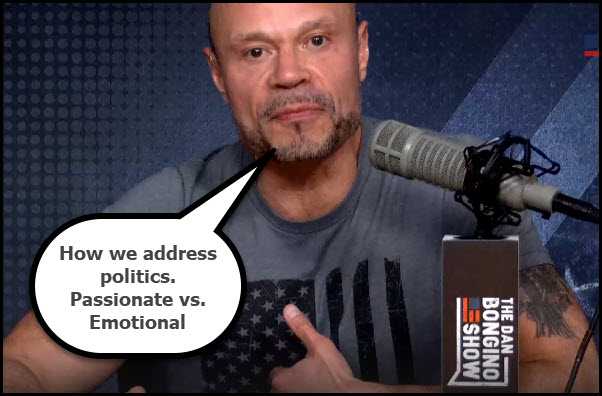
    The day after, political commentator Dan Bongino made a critical observation: Republicans are approaching this moment in history with passion, while Democrats are responding with emotion.

    This distinction is crucial in understanding the growing divide in American politics. Passion fuels a sense of purpose, a drive to enact real change, and a commitment to debating the issues with conviction and integrity. Emotion, on the other hand, often leads to reactionary responses, resistance to dialogue, and an unwillingness to acknowledge progress when it does not align with a particular agenda.

    A stark example of this contrast was seen throughout the President’s speech. As he introduced individuals and families who had suffered personal losses due to the failures of past administrations—whether it was due to weak border policies, crime, or bureaucratic inefficiencies—the chamber was filled with applause and heartfelt support. That is, except from the Democrats, who sat in defiant silence.

    The most striking moment of the night was when the President recognized a 13-year-old brain cancer survivor, DJ Daniel, sitting in the gallery. A young boy whose resilience and strength had led him to dream of serving in law enforcement.

    When President Trump directed the head of the Secret Service to present him with an honorary commission and badge, the chamber erupted in applause, with many moved to tears. But the Democrats refused to even acknowledge the moment. They sat in their seats, arms crossed, unwilling to celebrate the triumph of a child who had endured so much.

    This is the divide we see today. One side approaches governance with passion, fighting to restore fiscal responsibility, eliminate waste, secure the nation, and promote economic prosperity. The other side, driven by emotion, resists and rejects—even at the cost of honoring a child who embodies the very spirit of perseverance and service to country. I do not wish to make this a sweeping statement that assumes all members of the Democratic party are unwilling to have an open dialog, nor that they are void of any compassion for the families across the country that have lost love ones to the criminal element that has come across our border illegally, I simply can’t imagine that their party is all one sided in this humanitarian element of our country, however last night there was virtually no evidence of a sitting Democrat member of congress that was willing to show support for our brave citizens, our families with losses, or even a child that has battled so hard and long with a life threatening disease.

    I firmly believe that passion is what drives progress, while unchecked emotion only deepens division. Passion allows for open debate, the exchange of ideas, and the ability to tackle tough issues with courage and conviction. Emotion, however, often closes the door to conversation, replaces discourse with outrage, and ultimately hinders meaningful progress. America is at a cross roads today. We are in a recovery mode from, IMHO of course, 4 years of mismanagement, corruption within the Administration, abuse by the Justice Department and Congress itself. If we do not face the challenges we have, the divide we are experiencing, with compassion for one another, and with an open heart and dialog towards a prosperous future, well our core values and foundational strength are at risk.

    As we move forward as a nation, we must ask ourselves: Do we want our conversations to be fueled by passion and commitment to the American people, or one dictated by fleeting emotions and obstruction?

    The choice is clear. Passion builds. Emotion divides. And the future of our nation depends on which path we choose.

    Thank you by friends for taking the time to read my thoughts here, as well as the time to think through the message itself. Also, my thanks to someone I admire greatly from this law enforcement career as well as his commentary and voice to all Americans, Dan Bongino. This article was inspired by Dan’s commentary today.
  • Trade Penalties or Neighborhood Dues?

    “How Tariffs Hold Mexico & Canada Accountable Like HOA Fines”

    In communities across America, homeowners’ associations (HOAs) enforce rules to maintain order and safety. If a homeowner neglects their responsibilities—failing to maintain their property or allowing hazards to persist—the HOA steps in with fines. These fines aren’t arbitrary; they are meant to encourage compliance for the collective good of the neighborhood. Similarly, tariffs imposed by the U.S. on Mexico and Canada serve as economic penalties for failing to uphold border security, a shared responsibility that affects all of North America.

    Why Neighboring Countries Must Support One Another

    Borders are not just political lines on a map; they are critical zones that require cooperation to ensure safety and economic stability. When one country neglects its responsibility to control crime, drug trafficking, and illegal crossings, the consequences spill over into neighboring nations.

    For the United States, the influx of illicit drugs and criminal elements crossing from Mexico, as well as security lapses from Canada, poses a direct threat to American communities. Just as an HOA holds residents accountable for maintaining the safety and appeal of the neighborhood, tariffs serve as a mechanism to pressure neighboring nations into acting responsibly. The expectation is not unreasonable—if Mexico and Canada want the benefits of trade with the U.S., they must also take an active role in border security.

    A History of North American Cooperation on Border Security

    Despite current challenges, history shows that when the U.S., Mexico, and Canada work together, the results benefit all three nations.

    1. Post-9/11 Security Measures – After the September 11 attacks, the three countries collaborated through agreements like the Smart Border Declaration (2001) to enhance security while facilitating trade. These measures demonstrated that balancing security with economic growth is possible when nations cooperate.
    2. The Merida Initiative (2008) – This partnership between the U.S. and Mexico allocated funding and resources to combat organized crime and drug trafficking. By working together, both countries saw reductions in cartel-related violence and drug smuggling at various points in time.
    3. The Canada-U.S. Safe Third Country Agreement – Designed to manage refugee flows, this agreement illustrates how structured policies between neighbors can create order and security without impeding trade or economic stability.

    These examples show that when nations take shared security seriously, they can create ripple effects of positive outcomes. Conversely, when cooperation breaks down, crime and instability rise, just as a neglected home in a neighborhood can bring down property values and safety for everyone.

    If America’s borders are not secured and our border patrol does not have the support of our neighbors, well for lack of a better analogy, “There goes the neighborhood!”

    The Positive Outcomes of Working Together

    If Mexico and Canada take stronger action to curb illegal crossings, drug trafficking, and criminal activity at the borders, the benefits would be significant:

    • Reduced Drug Flow into the U.S. – A more secure border means fewer fentanyl-related deaths and less cartel influence.
    • Economic Growth and Stability – Stronger security allows for safer and more predictable trade, benefiting businesses and consumers.
    • Better Diplomatic Relations – Cooperation strengthens North American unity, making it easier to negotiate trade agreements and other beneficial policies in the future.
    • Lower Enforcement Costs – A secure border reduces the strain on U.S. law enforcement and border patrol, allowing taxpayer dollars to be allocated elsewhere.

    Tariffs: America’s HOA Fine for Negligence

    Tariffs often seem like a complicated economic tool, but in reality, they are a straightforward concept: they are financial consequences imposed to correct undesirable behavior. When a country imposes tariffs on another, it’s akin to an HOA issuing fines to a homeowner who refuses to maintain their property.

    • Tariffs incentivize action – Just as a fine compels a homeowner to fix a broken fence or clear hazardous debris, tariffs push nations to prioritize border security.
    • Tariffs are reciprocal – Mexico and Canada already impose tariffs on American goods, just as HOAs charge dues and fines to all members, not just specific residents.
    • Tariffs fund enforcement efforts – The revenue generated from tariffs can be reinvested into border security initiatives, making it a self-sustaining mechanism.

    Media Misrepresentation and the Political Narrative

    Legacy media outlets often frame tariffs as aggressive economic warfare rather than as reasonable consequences for inaction. In the case of President Trump’s tariff proposals, the media paints them as reckless and harmful to trade. However, when examined through the lens of common sense and reciprocity, tariffs emerge as a necessary tool to enforce responsibility. If the U.S. would be expected to step up its border security if the roles were reversed, then Mexico and Canada should be held to the same standard.

    Conclusion

    Just as an HOA fine isn’t about punishing homeowners but about maintaining the safety and well-being of the neighborhood, tariffs are not about economic hostility—they are about ensuring that all parties fulfill their responsibilities. If Mexico and Canada want to enjoy the benefits of free trade with the U.S., they must also contribute to securing the North American region. Cooperation, accountability, and shared responsibility are the foundation of a safe and prosperous neighborhood—whether in a local community or across international borders.

    As the President of my neighborhood HOA for over a decade, I can relate to how HOA fines and dues are not always met with a positive mindset by all residents. However, it is important to recognize the crucial role that security plays in our neighborhoods, just as it does at our national borders.

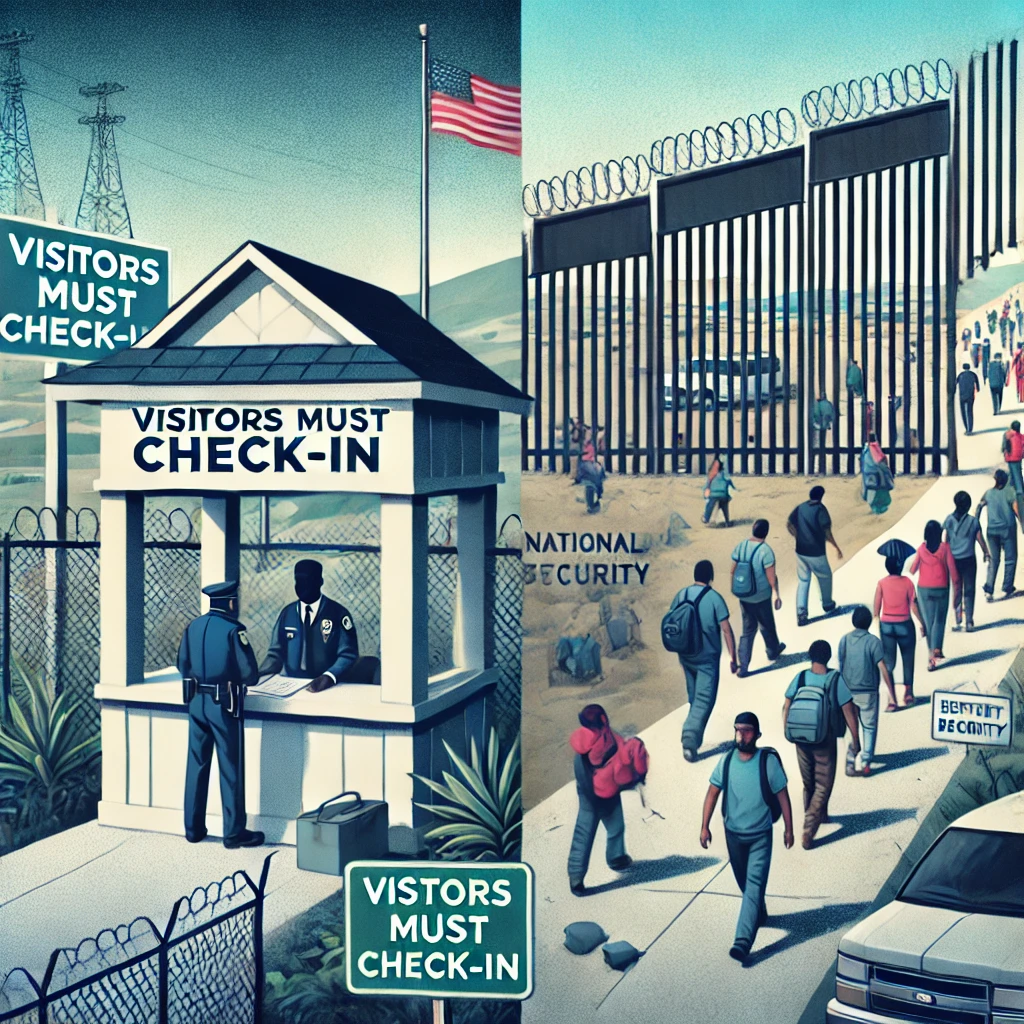
    Consider this scenario: If you live in a gated community, the developer installed walls and gates as an added measure of security. You purchased your home with the expectation that these security features would protect you and your family from intruders, criminals, and vandals. The front gate and guardhouse serve a critical function, ensuring that guests, workers, prospective buyers, and visitors enter through a monitored point, keeping your community safe.

    Now, think of our nation’s border walls and points of entry in the same way. Just as you wouldn’t expect—or welcome—people climbing over your fence, trespassing in your backyard, or sneaking into your community, you shouldn’t expect or welcome individuals who enter our country illegally, bypassing legal entry points.

    Common sense tells us that if someone is willing to break the law to enter a country they wish to live in—despite legal processes being available—it raises concerns about their intentions and trustworthiness. That’s certainly not the best way to establish a positive new neighborly relationship, is it?